
Intro: How do ICTs fit into physical space?
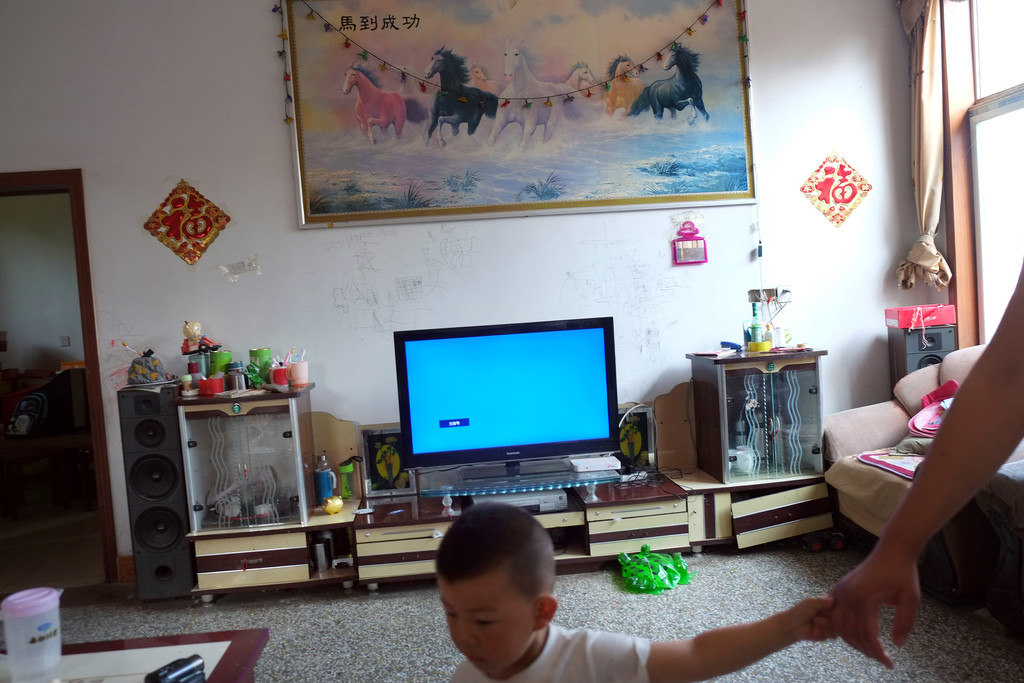
Flat-screen monitors are a focal point of many front rooms: Chinese homes often have a strong emphasis on symmetry, as illustrated in this photo. Placed in the center of a somewhat worn set of furniture sits the family's much newer TV. The TV is flanked by two tall speakers. The placement of furniture in the homes I visited indicates that watching TV is one of the main functions of the main room or guest room, with the best couches placed directly opposite the TV and the most important picture or work of calligraphy placed above the TV. Large, flat-screen TVs are a symbol of status and smaller, non-flat screen TVs are much less likely to be afforded a prime place in any room.
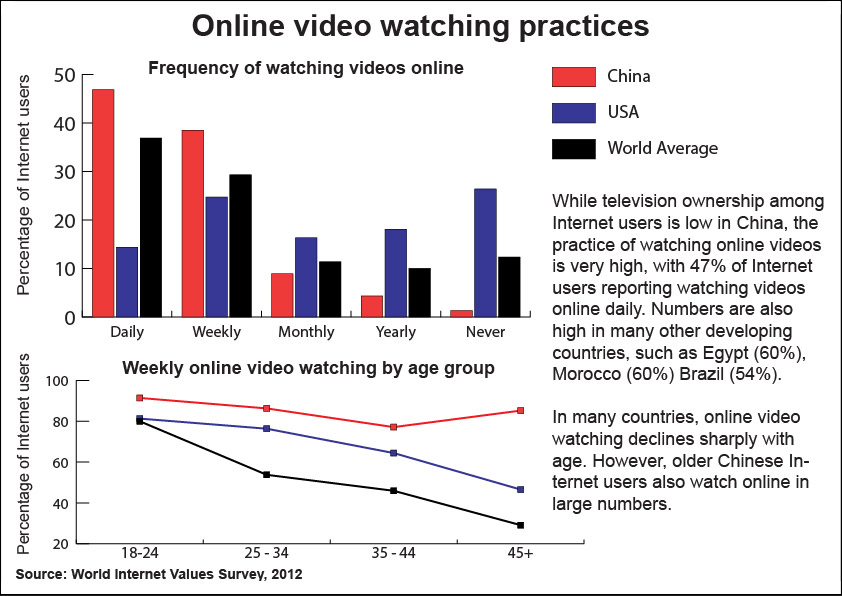 However, this is also simply an indication of the importance of TV to an individual household. Those who are less concerned with watching TV are more likely to place it in a corner and are less likely to spend money on the newest model. In China, people of all ages are also increasingly watching TV programs and movies on their cell phones and laptops, streaming this content directly from the Internet. This practice frees the consumption of television and film from its previously physically set place on a static monitor, to make it a more dynamic and opportunistic process. While in the houses I visited, the TV sets, which were on when I arrived, were turned off soon conversation started (rather than immediately), when I entered shops and offices where workers were watching movies on their computers or phones, these programs were rarely paused or turned off, indicating, perhaps, a different TV watching practice among those who are watching TV in the home on static sets compared to those who are watching TV on portable and multipurpose devices.