Intro: How do people approach ICTs?
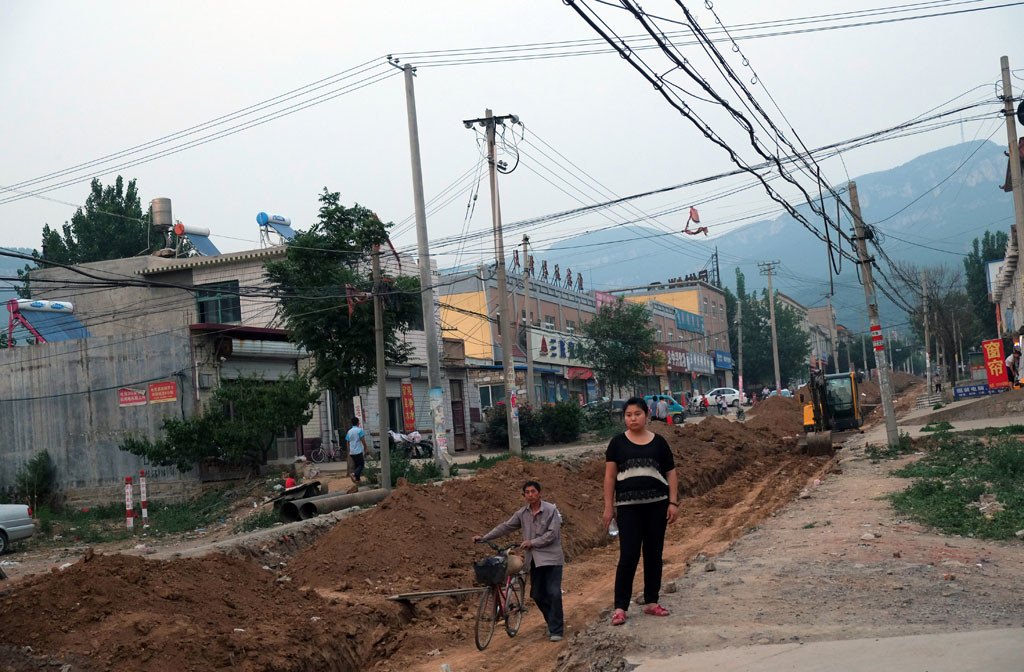
Attitudes toward ICTs are overwhelmingly positive: When I visited to conduct this research project, two of the town's main roads had been dug up to lay new pipes and cables. This work had a huge effect on lives of people in the town, but the temporary inconvenience of the project was accepted as a fair price for development. 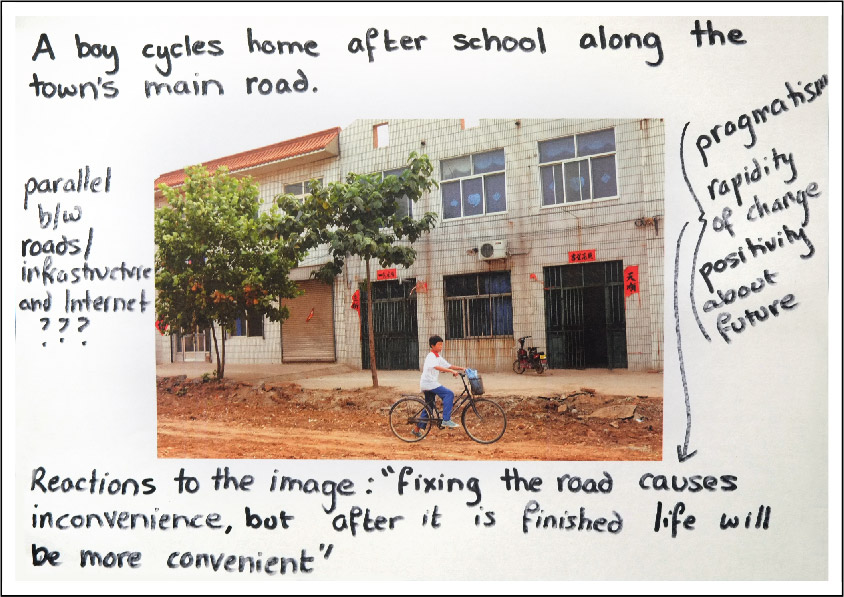 Even local restaurant owners whose business was reduced because people could no longer sit outside the restaurants to eat dinner were positive that the results of the project would be worth the inconvenience caused; this way of thinking can also be seen as a reflection of people's attitudes toward China's rapid development more generally.
Both physical and virtual connectivity has hugely increased in the town in the past ten years due to major infrastructure investments. Talking about the effects of the Internet on the lives of townspeople, one local teacher said that ten years ago everyone wanted to move out of small towns into the cities but now living in the countryside could be even better than in cities as information travels rapidly throughout China via the Internet, and improved roads and public transport mean that it is easy to travel to the city.
There is a strong domestic discourse of China as a developing country. This discourse means that problems associated with development, such as these road works, are accepted as part of hope for a better future. ICTs are generally seen as overwhelmingly positive 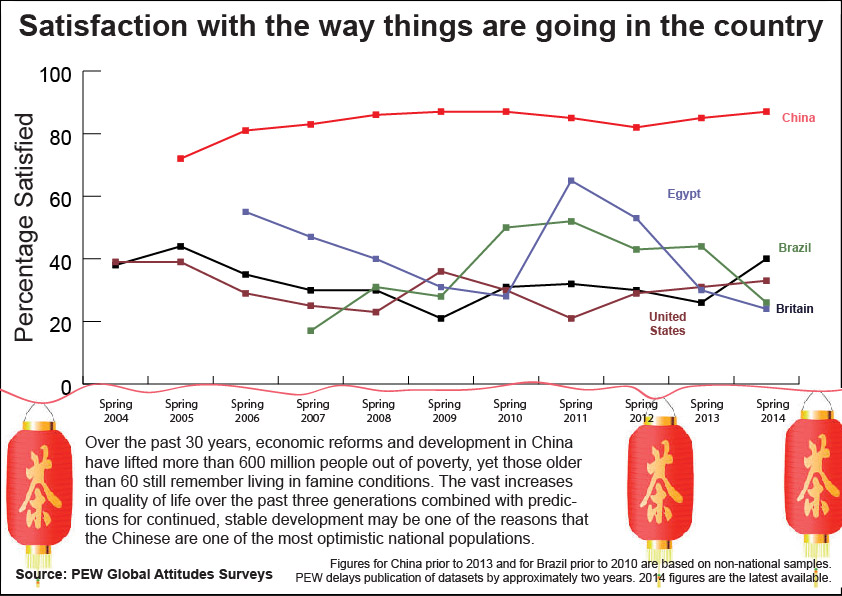 and several people expressed the idea that the problems associated with these technologies (such as their effects on children's studies and social relations) are seen as something that will normalize as the technology becomes domesticated.[1]