
Incongruity
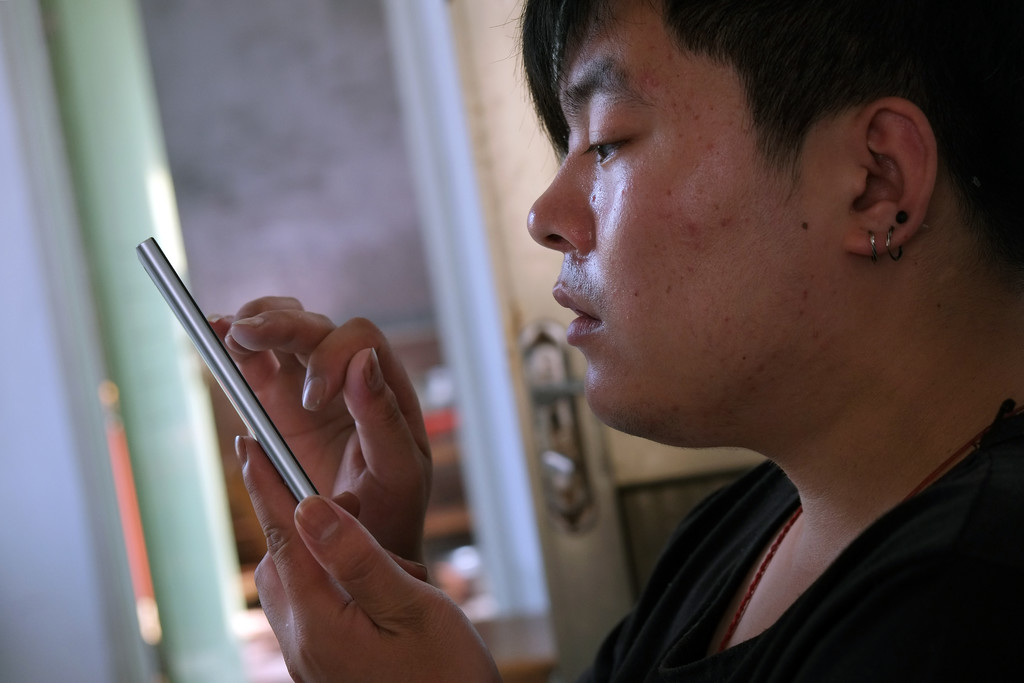
Cell phones are objects that are treated with great care: Cell phones are held close to the body and face. They are cradled in the palms of hands and touched gently. Many individuals see their cell phones both as extensions of themselves and of their bodies[1].
Parents frequently allow young children to play with their phones and cameras, and children are taught early the proper care and handling of these fragile objects[2]. While the screens of smart phones in China seem to be getting larger and larger, perhaps responding to the demands of so many to watch movies and TV comfortably on their phones, they remain fragile and expensive objects that are treated with care and respect. The light that emanates from these devices illuminates the face and creates a brightened, colourful window that often darkens the world outside the box.
These objects are very personal; one woman from an affluent family proudly told me that her household had three members, two cars and three phones.
The ability of each family member to own their own phone is not just about the utility of being connected. The fact that the number of cell phones in the household was listed straight after the number of cars indicates their importance as objects and the importance of the relationship between the individual and his or her phone[3]. 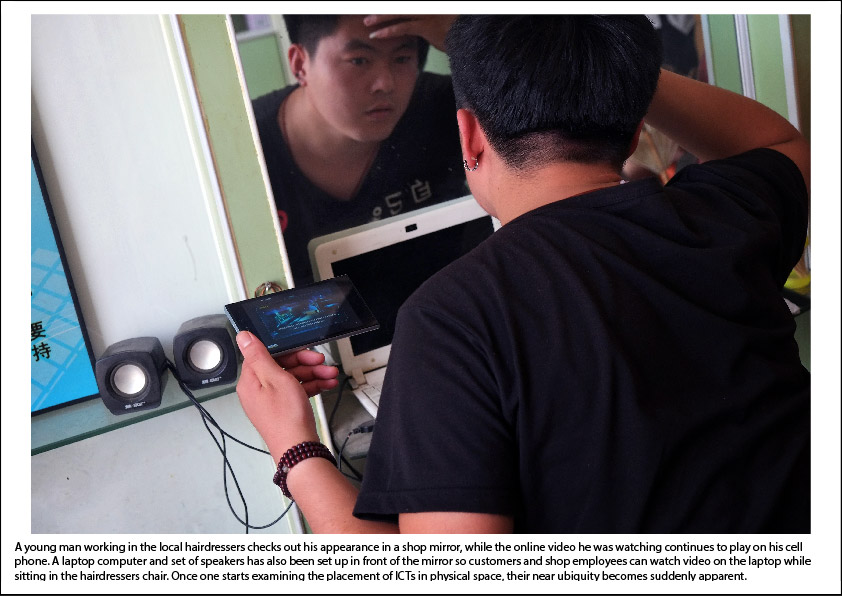
A parent (particularly the mother) will often consent to let a younger child play with their phones and the ability to demand to inspect the others phone is seen as a right between married couples. However, these practices underscore rather than detract from the idea of a special relationship between an individual and their electronic devices that can exceed their place as functional objects.